
Mindvalley: Self Improvement
Mindvalley Inc.Education
4.11.94K Reviews
- Version
- 9.2.29
- Installs
- 1.00M
- Age Rating
- Everyone
Screenshots

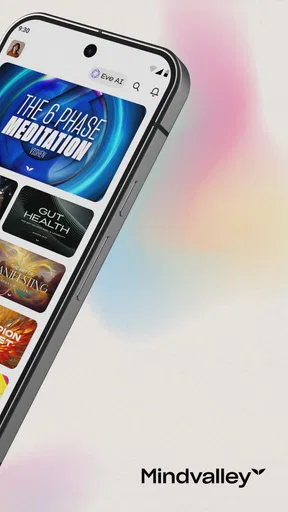

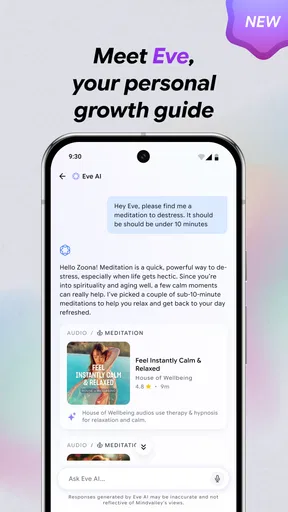

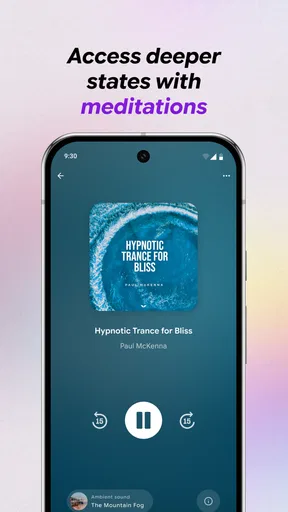
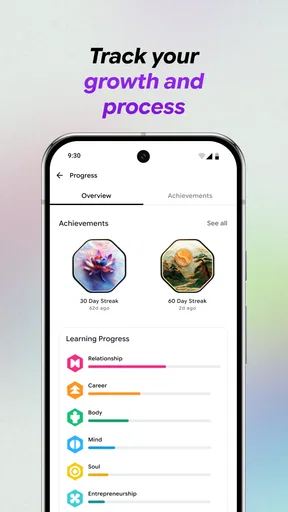
Our Review of Mindvalley: Self Improvement
 Analysis by Appyee
Choosing a self-improvement app is less about finding the biggest library and more about finding a format you will return to. I look for a clear next step, material that feels relevant to an actual goal, and a pace that can fit around work and home life. Mindvalley: Self Improvement is an education app from Mindvalley Inc. built around personal growth, with courses and daily activities rather than a single narrow practice. That makes it worth considering if you want to explore several areas of development in one place.
It is free to install and rated for Everyone, though the broader experience includes in-app purchases ranging from $0.99 to $399.99 per item. I would treat that range as a reason to check the terms of a particular course or purchase before committing, rather than assuming that every learning path is included at no cost. The app has a 4.1 average from around 20,000 ratings, and more than a million installs; those figures suggest a sizable audience, but they cannot tell you whether its teaching style will suit you personally.
Start with a goal, not the whole library
Mindvalley can cover themes such as productivity, meditation, health, and relationships. That breadth is appealing, but it can also make browsing feel like progress when you have not yet put anything into practice. I’d start with one concrete question—such as wanting a steadier morning routine or a more deliberate way to learn—and choose content that speaks to it. This keeps the app from becoming another collection of unfinished intentions.
A useful way to judge a course is to ask what you will do differently after a lesson. If the answer is unclear, pause before adding another course. For a practical routine, keep one brief note after each session: the idea you want to test, when you will test it, and what would count as a useful result. That simple step helps separate engaging material from advice that actually fits your life.
First Impressions and User Interface
The first thing I noticed when I opened Mindvalley: Self Improvement was its clean, intuitive interface. It's like they knew exactly what I needed—a clutter-free zone to focus on my personal growth. The colors are soothing, and the navigation is pretty straightforward. If you’re someone who gets overwhelmed by too many options, you’ll appreciate how everything is laid out.
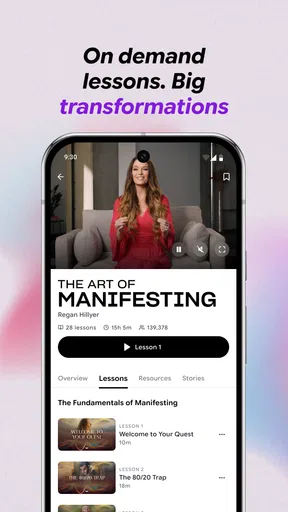
Upon logging in, you’re greeted with your dashboard, where you can see your current courses, recommended content, and a nifty progress tracker. The app also gives you a daily quest, which is a small, bite-sized task or meditation to get your day started on the right foot. I found this feature especially motivating because it makes self-improvement a daily habit rather than a daunting task.
Courses and Content
Now, let’s talk about the heart of the app—the courses. Mindvalley offers a wide range of courses across various categories like productivity, meditation, health, and relationships. Each course is designed by experts and includes video lessons, exercises, and community interactions. What’s cool is that the courses aren’t just lectures; they’re interactive and engaging. You feel like you’re part of something bigger, a community of like-minded individuals on a similar journey.
I particularly enjoyed the "Superbrain" course by Jim Kwik. It’s all about enhancing your memory and learning capabilities. The exercises were practical and surprisingly fun. Plus, it was awesome to see noticeable improvements in my memory retention just a few weeks in.
Turn lessons into a workable routine
The daily quest is best treated as a doorway, not a complete plan. On a busy morning, I’d use a short activity to get started, then return to a course lesson when I have enough attention to reflect and try its exercise. If I only have a few minutes, I would not rush through several lessons just to make the progress tracker move. A small action I can repeat is more useful than a long session I cannot sustain.
For example, someone balancing a commute and family responsibilities might set aside a quiet moment after breakfast for the daily task, then pick one course exercise to try later in the week. The practical benefit is the separation between a low-effort prompt and deeper learning. It gives you a way to stay connected to a goal even on crowded days, without pretending that a quick activity alone will solve a larger habit or relationship problem.
Community and Connection
One of the standout features is the community aspect of Mindvalley. You’re not just learning alone; you’re part of a tribe. Each course has its own community where you can share your progress, ask questions, and support others. It’s like having a group of personal cheerleaders with you every step of the way.
The app also hosts live events and webinars, which are fantastic for networking and learning from others. I attended a live meditation session, and it was a game-changer. There’s something powerful about connecting with others in real-time, even if it's through a screen.
Who benefits from the social side
The community is a better fit for learners who like to explain an idea, hear how someone else applies it, or return to a goal with a sense of shared momentum. It may be less useful if you prefer private study or find group discussion distracting. You do not need to make the social side the center of your routine: try engaging when a question comes up, then step away when you have what you need. That keeps connection supportive rather than another obligation.
Live sessions can also be easier to value when you treat them as a scheduled learning moment, not something you must attend to keep up. If the timing works, real-time participation can add energy; if it does not, a course lesson or personal practice may be the more realistic choice. I would choose based on how I learn best, rather than assuming that more interaction always means better learning.
What Sets It Apart?
So, what makes Mindvalley different from other self-improvement apps? For me, it’s the holistic approach. It doesn’t just focus on one aspect of life but encourages growth in all areas. Plus, the content is continually updated, so there’s always something new to learn. The app is also quite generous with its free content, allowing you to explore a lot before committing to a subscription.
Another highlight is the personal growth plans. Based on your interests and goals, the app curates a personalized learning path. It’s like having a personal coach in your pocket, guiding you on your journey.
How it compares with other ways to learn
Compared with a meditation-only app, Mindvalley makes more sense when you want meditation to sit alongside subjects such as learning, health, or relationships. If your main aim is simply to build a quiet daily meditation practice, a focused meditation tool may be easier to navigate and less distracting. Likewise, a general video-learning platform may suit someone who wants to search widely across unrelated subjects, while this app’s appeal is its personal-growth framing and the combination of lessons, exercises, and community.
Books, podcasts, and free videos can be better choices if you prefer to learn at your own pace without a guided course structure or a paid commitment. Their trade-off is that you may need to assemble your own sequence and decide what to practice. Mindvalley’s plans can help with that choice, but a curated path is still a suggestion, not a guarantee that a topic or teaching style is right for you.
Before paying, test the fit
The app is free to download, but the presence of paid items means I would distinguish trying the app from deciding to buy a course. First, explore the material available to you and check whether the lesson format keeps your attention. Then consider whether you have time to do the exercises, not merely watch the videos. A course that sounds appealing but sits untouched is poor value, whatever its subject.
Mindvalley was released on May 11, 2016, and version 9.2.21 lists Android 8.0 as its minimum operating-system requirement. Those details are useful when checking device compatibility, especially if you use an older Android phone. They do not change the more important personal question: whether the app’s course-led approach matches the way you want to learn and practice.
Where another choice may be better
I would skip this app if I wanted a strictly clinical mental-health service, professional therapy, or a substitute for medical advice. Personal-development lessons and meditation can support reflection, but they are not a replacement for qualified care. It may also be the wrong choice if I only want one very specific tool and do not want recommendations, broader topics, or a community element around it.
It is also worth being realistic about motivation. A dashboard, daily prompt, and progress indicator can make starting easier, but they cannot create time or follow-through for you. If you tend to collect courses without finishing them, choose one goal and resist browsing for a while. If you prefer a simple checklist or a paper journal, those may be better companions—or better alternatives—than adding another learning platform.
Final Thoughts
At the end of the day, Mindvalley: Self Improvement is more than just an app; it’s a lifestyle choice. It’s perfect for anyone committed to personal growth and looking for an engaging, supportive platform to help achieve their goals. While there’s a subscription fee for the full experience, the investment in yourself is well worth it.
Whether you’re looking to boost your productivity, deepen your meditation practice, or just connect with a community of growth-oriented individuals, Mindvalley might just be the app that helps you unlock your full potential. Give it a try and see how it transforms your life.
My recommendation
I’d recommend trying Mindvalley if you enjoy guided courses, want to explore more than one personal-growth topic, and are willing to turn lessons into small actions. I would not choose it simply because the library looks motivating; the value comes from engaging with a course and testing its exercises in everyday life. Start with one goal, see whether the format works for you, and make a purchase only when you understand what you are choosing.
For someone who wants a broad, encouraging learning environment, it can be a compelling option. For someone who wants a single-purpose meditation timer, independent reading, or professional support, a more focused alternative is likely a better fit. That distinction is what I would keep in mind before downloading: the app can help organize personal learning, but the right tool is the one that fits the need you actually have.
Verdict
Strengths of Mindvalley: Self Improvement
- Extensive library of courses available.
- User-friendly interface and design.
- High-quality video and audio content.
- Offline access for learning on-the-go.
- Regularly updated with new content.
Limitations of Mindvalley: Self Improvement
- Subscription can be expensive for some.
- Requires internet for full functionality.
- Limited interactive features in courses.
- Content may not cater to all learning styles.
- Notifications can be overwhelming.
Similar Picks in This Category
View All
Duolingo: Language Lessons
Duolingo4.7

Google Classroom
Google LLC2.8

Unacademy: Learn & Crack Exams
Unacademy3.2

Bible App for Kids
Life.Church4.4

Cake - Learn English & Korean
Cake Corp.4.7

Brainly: AI Homework Helper
Brainly4.5
Frequently Asked Questions
What is Mindvalley and how does it work?
Mindvalley is a personal growth and self-improvement platform offering a wide range of courses and programs. Users can explore topics such as mindfulness, productivity, and personal development. The app provides video lessons, guided meditations, and interactive exercises to help users enhance various aspects of their lives. It requires a subscription for full access.
Is Mindvalley suitable for beginners in self-improvement?
Yes, Mindvalley is designed to cater to users at all levels, including beginners. The platform offers introductory courses and easy-to-follow content, making it accessible for those new to self-improvement. Each course is structured to build foundational skills gradually, ensuring users can progress at their own pace.
What types of courses are available on Mindvalley?
Mindvalley offers a diverse range of courses covering topics such as mindfulness, meditation, productivity, health, relationships, and career growth. Each course is curated by expert instructors and includes video lessons, exercises, and community support. Users can choose courses based on their specific interests and personal growth goals.
Is there a community aspect within Mindvalley?
Yes, Mindvalley includes a vibrant community feature where users can connect with like-minded individuals. The platform encourages interaction through discussion forums, group challenges, and live events. This community aspect enhances the learning experience by providing support, motivation, and opportunities to share insights.
What devices support the Mindvalley app?
The Mindvalley app is available on both Android and iOS devices. It requires an internet connection to stream video content and participate in live sessions. Users can also access their courses via the web platform on desktops and laptops, providing flexibility in how they choose to engage with the content.
